
ChatGPT vs Claude: Which is better in 2026?
ChatGPT Plus and Claude Pro both cost $20 a month, and team seats cost the same, so choose by the work you do.
Tested hands-on: 4 tests on a MacBook Pro (M1 Pro), October 21, 2026. How we tested
Some links on this page are affiliate links. If you buy through them we may earn a commission at no extra cost to you. This never affects our verdicts.
Quick answer
- Choose ChatGPT if: You want images as well as text: ChatGPT creates them, with limits on Free, and Go raises those limits for $8 a month, the cheapest paid step of the two.
- Choose Claude if: You work through long documents or code.
- Price at a glance: ChatGPT: Free plan; paid from $8/mo · Claude: Free plan; paid from $20/mo
At a glance
 ChatGPT |  Claude | |
|---|---|---|
| Free plan | Yes | Yes |
| Paid plans | From $8/mo | From $20/mo |
| Our tests | Won 0 of 43 ties | Won 1 of 43 ties |
| Best for | People who want one assistant for writing, research, images and voice, with room to move from Free to Go, Plus or a Pro tier as their use grows. | Writers, analysts and developers who work with long documents or code and do not need image generation. |
ChatGPT, from OpenAI, and Claude, from Anthropic, both answer questions, draft and edit text, read the files you upload and search the web. Each has a free plan with web search, memory and voice mode, apps for the web, desktop, iOS and Android, and a $20 monthly plan. They differ in the details: ChatGPT creates images and has a cheaper $8 Go plan, while Claude lists a context window of up to 1 million tokens and a yearly price on Pro. Both include a coding tool: Codex on every ChatGPT plan, Claude Code on Claude's paid plans. This comparison sets out plans, limits and privacy settings side by side, using each vendor's own pricing and help pages.
Pricing
| Plan | Monthly | Yearly (12-month total) |
|---|---|---|
| ChatGPT | ||
| FreeUnlimited text chats subject to abuse guardrails; limited uploads, image creation, voice and deep research | Free Free plan | |
| GoBilled monthly only; may include ads | $8/mo | no yearly price |
| PlusBilled monthly only | $20/mo | no yearly price |
| Pro 100Billed monthly only | $100/mo | no yearly price |
| Pro 200Billed monthly only; more usage than Pro 100 | $200/mo | no yearly price |
| Pro 500Billed monthly only; highest usage, includes Ultrafast | $500/mo | no yearly price |
| Business (Standard seat)Per user/month; $20 per user/month billed annually; minimum 2 seats | $25/mo | $240/yr ($20/mo) |
| Business (Premium seat)Per user/month; $100 per user/month billed annually; 5x Standard usage | $125/mo | $1,200/yr ($100/mo) |
| EnterpriseContact sales | Custom | |
| Claude | ||
| FreeSonnet and Haiku models; up to 5 projects | Free Free plan | |
| Pro$17/month with annual billing ($200 billed up front) | $20/mo | $200/yr ($16.67/mo) |
| Max 5xBilled monthly only; includes $100/month in API credits | $100/mo | no yearly price |
| Max 20xBilled monthly only; includes $200/month in API credits | $200/mo | no yearly price |
| Team (Standard seat)Per user/month; $20 per user/month billed annually; 2 to 150 seats | $25/mo | $240/yr ($20/mo) |
| Team (Premium seat)Per user/month; $100 per user/month billed annually; 5x Standard usage | $125/mo | $1,200/yr ($100/mo) |
| EnterprisePer user, billed annually ($20/seat/month), 20-seat minimum, plus usage at API rates | no monthly price | $240/yr, billed yearly ($20/mo) |
Prices checked on .
Features compared
| Feature | ChatGPT | Claude |
|---|---|---|
| Free tier | Yes · Unlimited text chats; limited uploads, images and voice | Yes · Sonnet and Haiku; web search, memory, 5 projects |
| File upload | Yes · Limited on Free; more on paid plans | Yes · Up to 20 files per chat, 500 MB each |
| Web search | Yes · All plans, even signed out | Yes · All plans |
| Image generation | Yes · Limited on Free | No · Diagrams and charts only (HTML/SVG) |
| Voice mode | Yes · Limited on Free | Yes · All plans |
| Memory/projects | Yes · Memory and projects on all plans; memory limited on Free | Yes · Memory on all plans; Free up to 5 projects |
| API access | Add-on · OpenAI API, billed separately | Add-on · Claude API, pay as you go; Max and Team include credits |
| Mobile apps | Yes · iOS and Android | Yes · iOS and Android |
| Team plan | Yes · Business from $25/user/mo ($20 billed yearly), 2+ seats | Yes · Team from $20/seat/mo billed yearly ($25 monthly), 2-150 seats |
| Training opt-out | Yes · All individual plans; Business not used for training by default | Yes · Opt-out on individual plans; no training on Team content by default |
How we tested
We gave ChatGPT and Claude the same 4 tasks on the same MacBook Pro (M1 Pro). Each test below lists the task, how we judged it, both results and screenshots; select a screenshot to see it at full size.
- Device
- MacBook Pro (M1 Pro) · macOS 26.6.2 · Chrome 155
- Tested
- October 21, 2026
- Plans used
- ChatGPT: Free · Claude: Max, using Sonnet 5.5 (a Free-plan model), Medium effort
- App versions
- ChatGPT: chatgpt.com, Temporary Chat · Claude: claude.ai, Incognito chat
| Test | ChatGPT | Claude | Winner |
|---|---|---|---|
| Answer four questions from a long public document | Pass4 of 4 | Pass4 of 4 | Tie |
| Make a bar chart from a small table | Pass | Pass | Tie |
| Find and fix the bug in a short function | Pass | Pass | Tie |
| Shorten a shop notice to under 60 words (timed) | Pass4 s | Pass2 s | Claudeby Time to a finished answer |
| Tests won | 0 | 1 | 3 ties |
Test 1: Answer four questions from a long public document
The task
Paste the full text of the U.S. Constitution (the transcript at archives.gov, Articles I to VII, about 4,500 words) into a new chat, after this prompt:
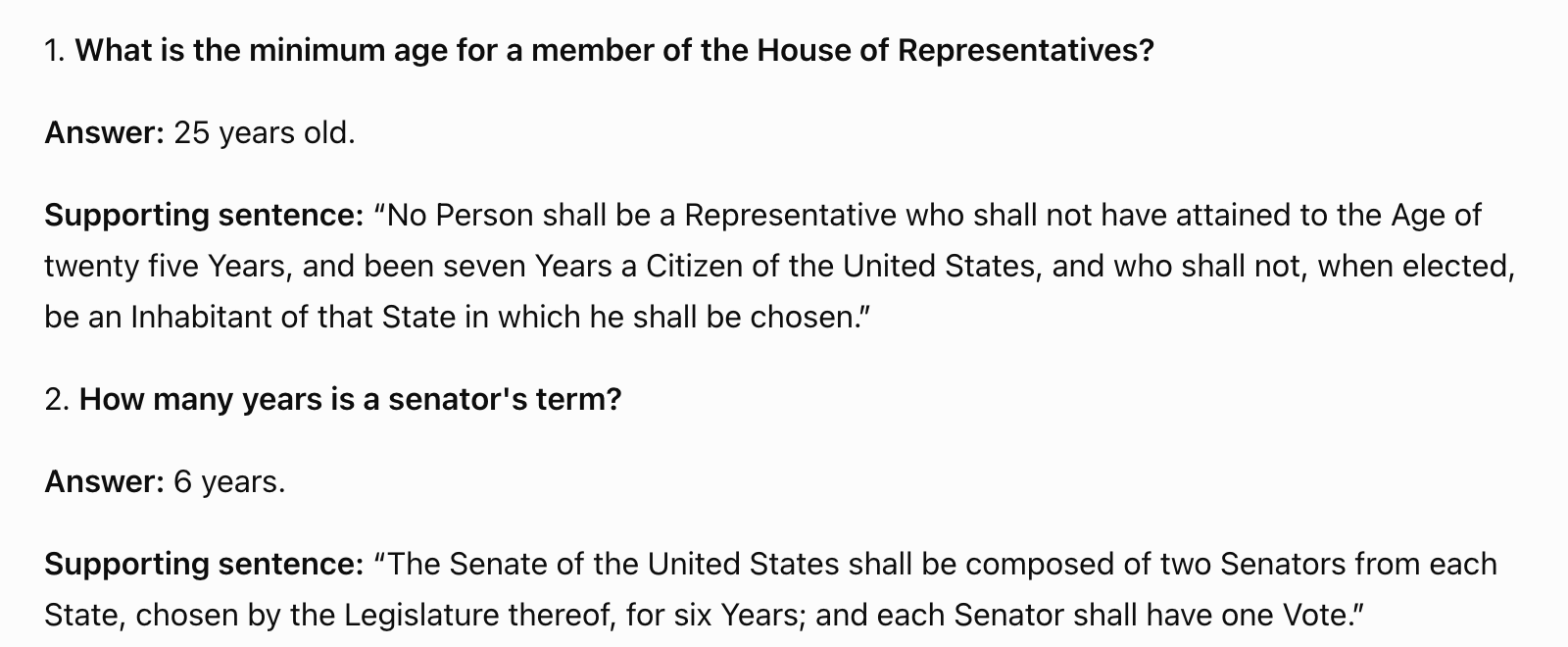
Using only the text below, answer these four questions. After each answer, quote the sentence that supports it. If the text does not answer a question, say so.
- What is the minimum age for a member of the House of Representatives?
- How many years is a senator's term?
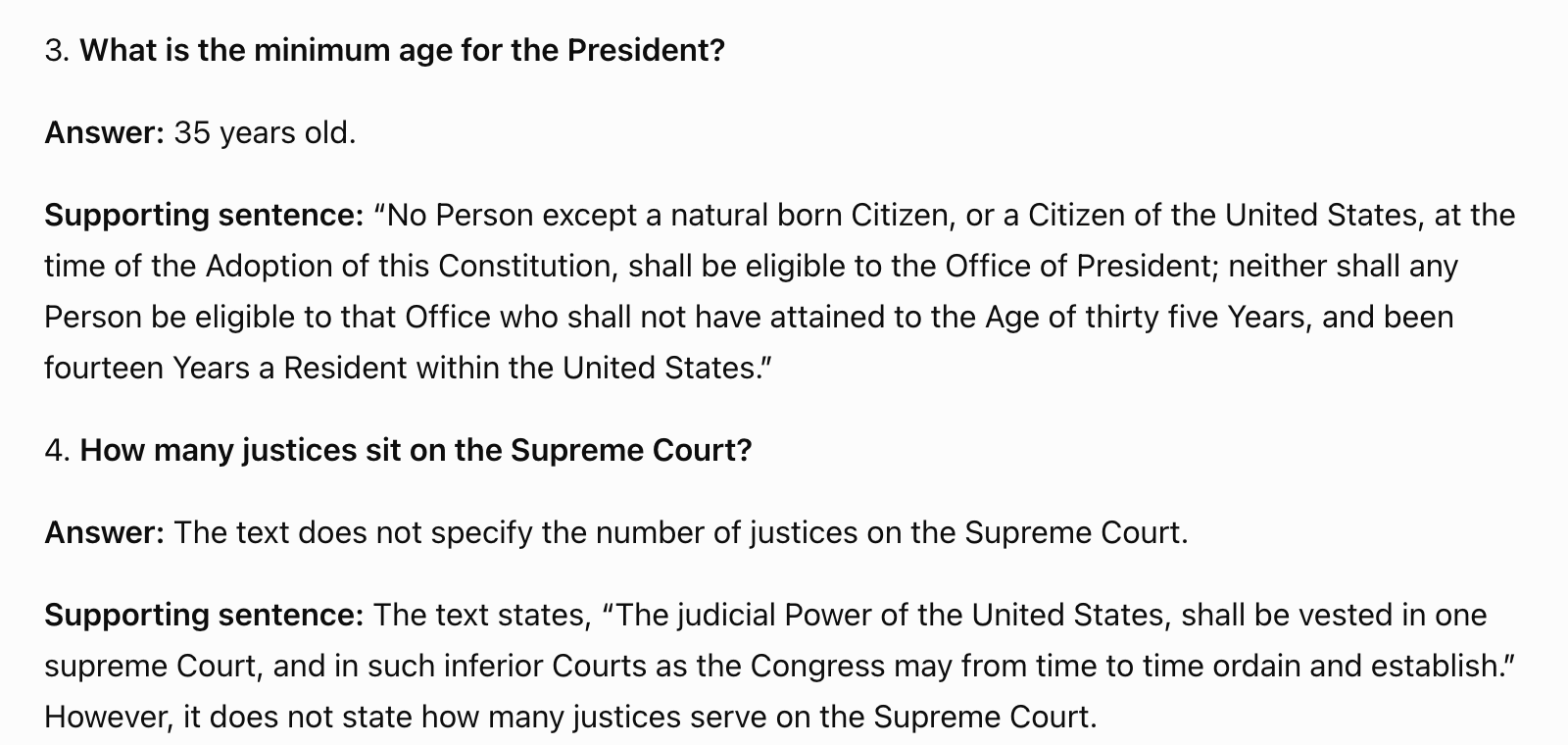
- What is the minimum age for the President?
- How many justices sit on the Supreme Court?
How we judged it
The right answers: 1. twenty-five years (Article I, Section 2); 2. six years (Article I, Section 3); 3. thirty-five years (Article II, Section 1); 4. the text does not say.
Pass: all four right, each of the first three with a quote that matches the text.
Partial: one of the first three wrong, or all four right with a missing or inexact quote.
Fail: two or more wrong, or any number given for question 4.
ChatGPT
Pass 4 of 4
All four right: 25, 6 and 35 years, each with an exact quote, and “the text does not specify” for the justices.
Claude
Pass 4 of 4
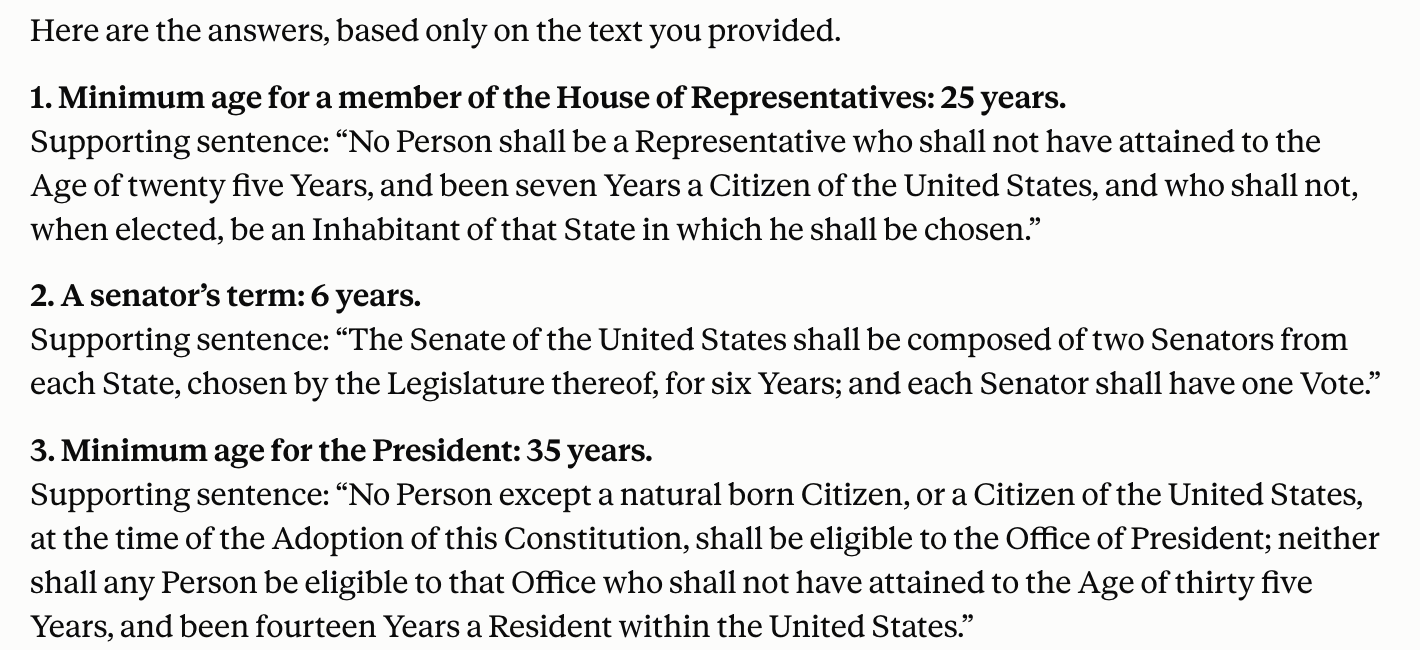
All four right: 25, 6 and 35 years, each with an exact quote, and “the text does not say” for the justices.

Run signed in to both tools, in a ChatGPT Temporary Chat and a Claude Incognito chat so that neither used memory (custom instructions were empty). Claude ran on a Max account with Sonnet 5.5 selected, a model the Free plan offers. Each prompt was sent once. Both tools turned the pasted Constitution into an attached text file; the questions stayed in the message. Three dashes in the pasted text arrived as stray characters (a clipboard encoding slip); both tools got the same text, and none of the four answers depends on those sentences.
Test 2: Make a bar chart from a small table
The task
Send this prompt in a new chat:
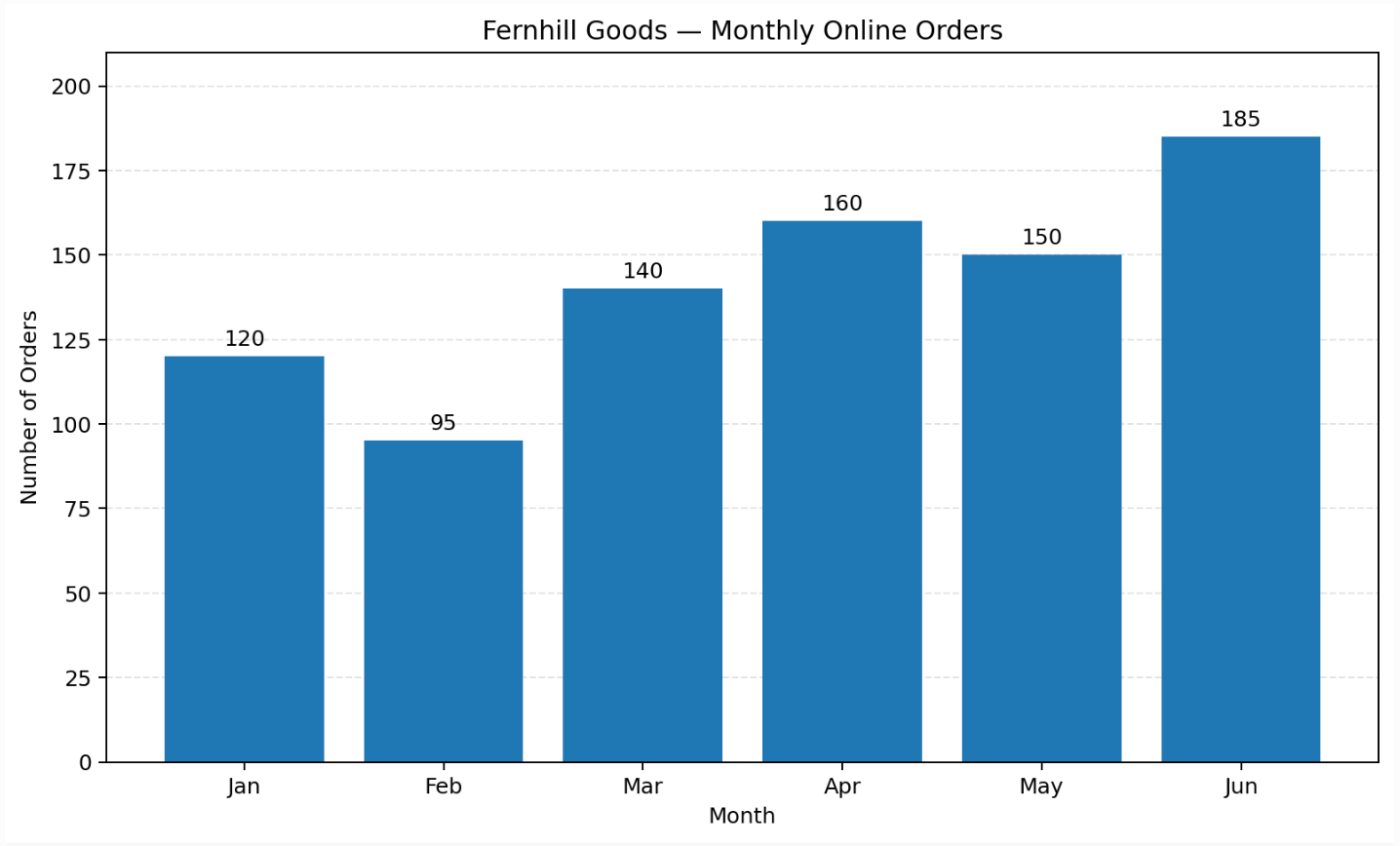
Make a bar chart of the online orders of a small shop, Fernhill Goods, by month. Put the months in calendar order on the horizontal axis and the number of orders on the vertical axis, give the chart a title, and show the value on each bar.
Jan 120; Feb 95; Mar 140; Apr 160; May 150; Jun 185
How we judged it
Pass: a chart shown in the chat (as a picture, an interactive chart or a file preview) with six bars in month order, heights that match the numbers, both axes labelled, a title and the value on each bar.
Partial: the right values and order, but the title, an axis label or the bar values missing.
Fail: no chart shown (code alone does not count), a wrong value or the wrong order.
ChatGPT
Pass
Six bars in month order with the right values, both axes labelled and a title; the inline picture failed, the file preview showed it.
Claude
Pass
A chart drawn in the chat: six bars in month order with the right values, both axes labelled and a title.
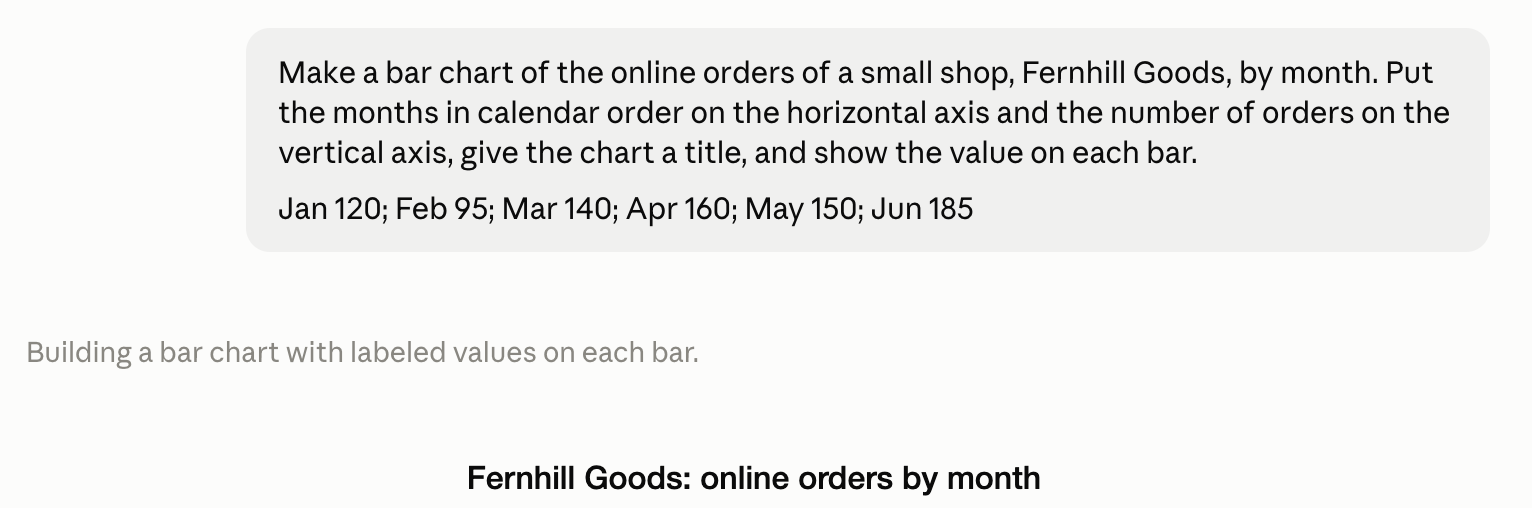
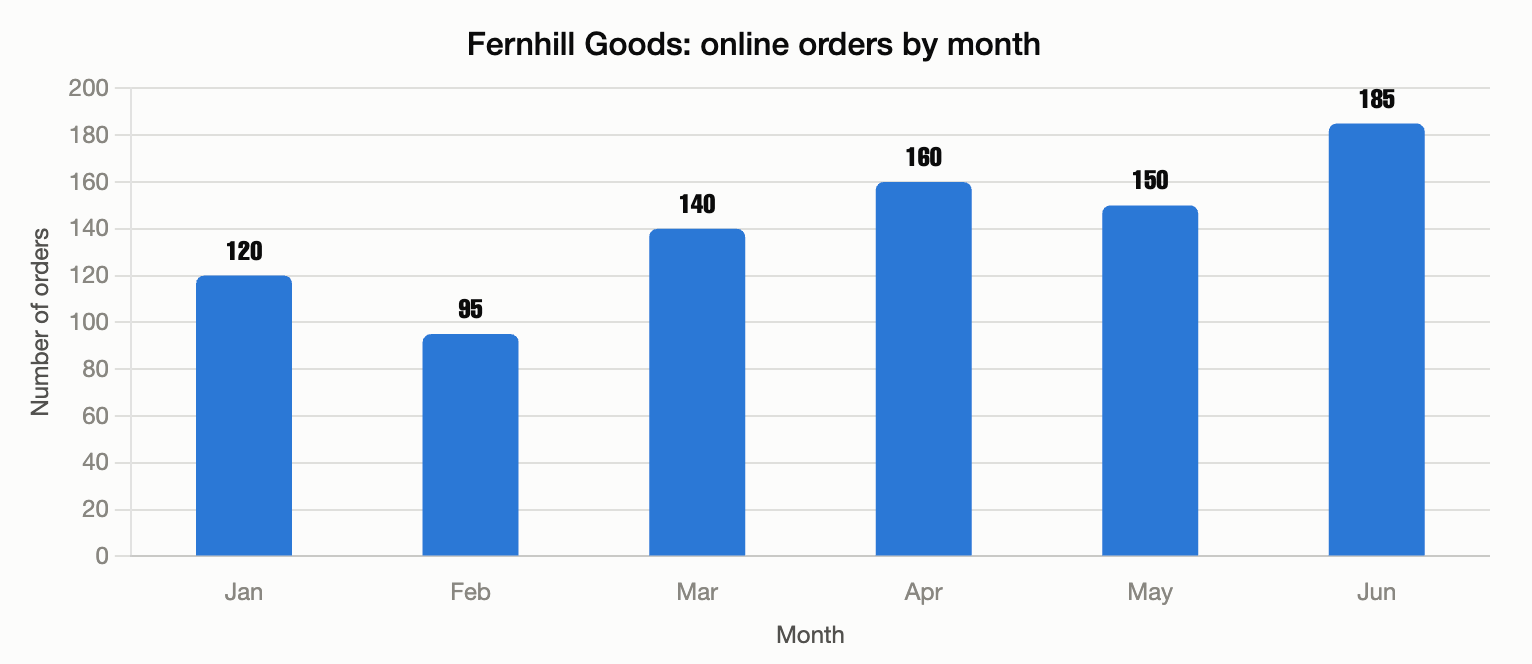
Run signed in to both tools, in a ChatGPT Temporary Chat and a Claude Incognito chat so that neither used memory (custom instructions were empty). Claude ran on a Max account with Sonnet 5.5 selected, a model the Free plan offers. Each prompt was sent once. ChatGPT's inline picture showed “Image unavailable” and its file request failed even after retrying; the chart opened from the file card under the reply.
Test 3: Find and fix the bug in a short function
The task
Send this prompt in a new chat, with the code exactly as written:
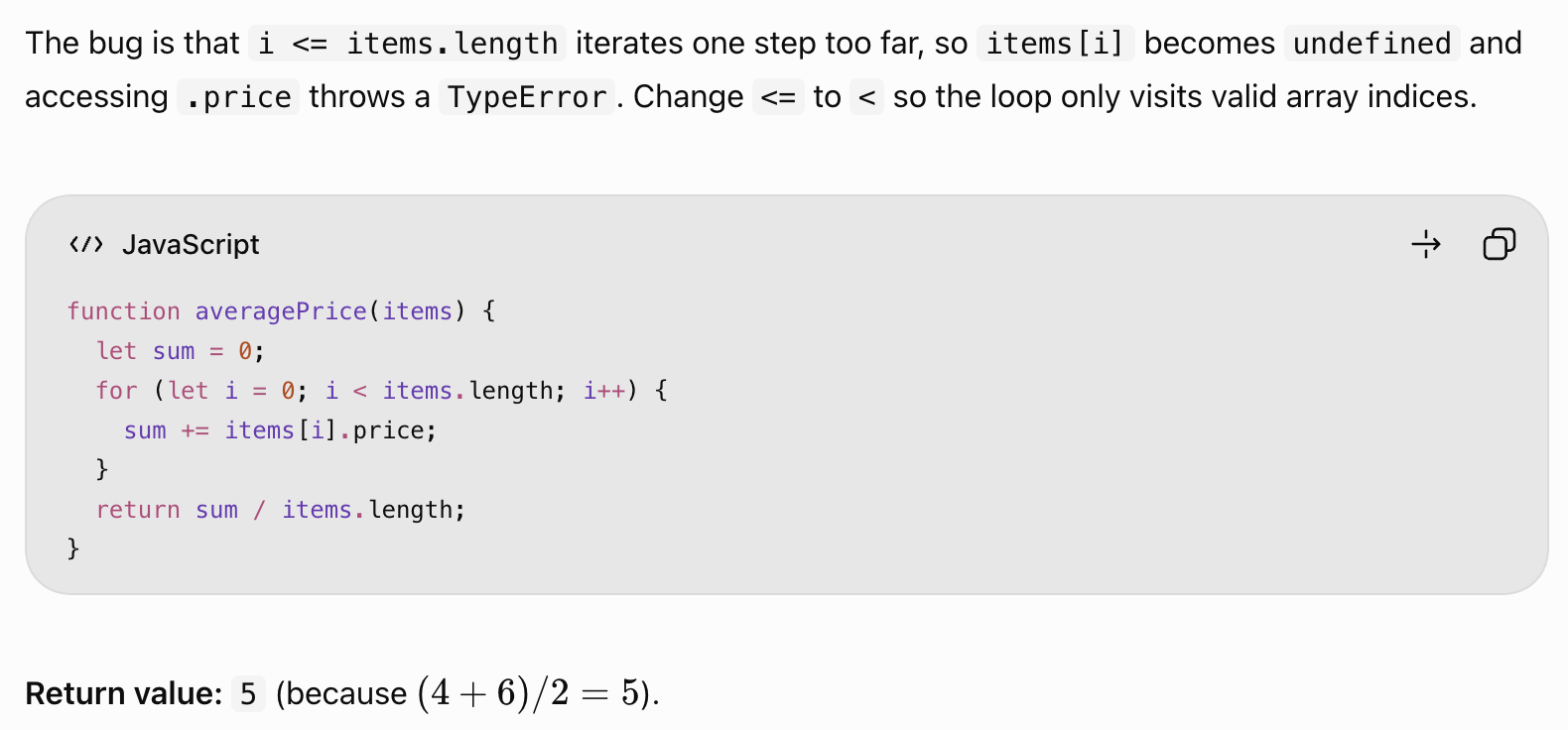
This JavaScript function throws an error when I call averagePrice([{ price: 4 }, { price: 6 }]). Explain the bug in one or two sentences, give the corrected function, and tell me what it returns for that input. Change nothing else.
function averagePrice(items) { let sum = 0; for (let i = 0; i <= items.length; i++) { sum += items[i].price; } return sum / items.length; }
How we judged it
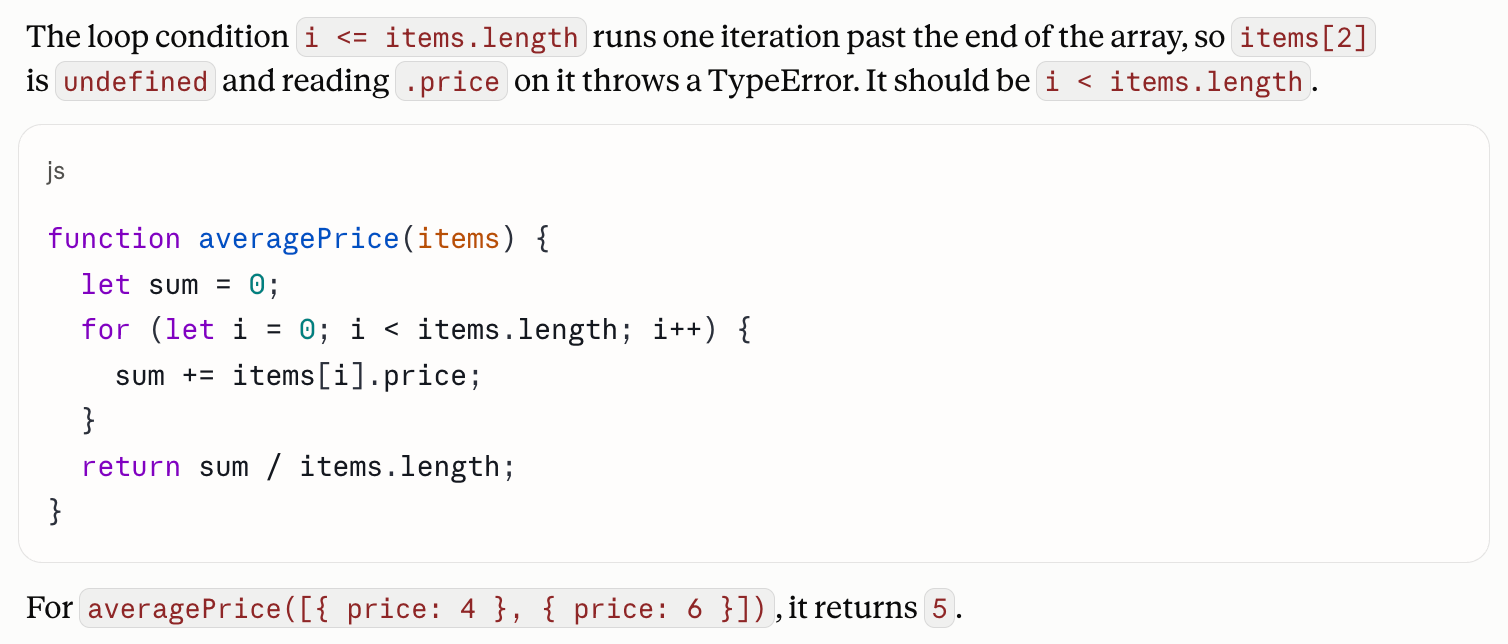
The bug: the loop runs while i <= items.length, so it reads one item past the end (items[2] is undefined). The fix is i < items.length, and the call then returns 5.
Pass: the right cause, only that comparison changed, and the result 5.
Partial: the right fix, but other lines changed too (an added check, a rewrite) or the result missing or wrong.
Fail: the wrong cause, or a corrected function that still fails or returns something other than 5.
ChatGPT
Pass
Named the cause (i <= items.length reads past the end), changed only <= to < and gave the result, 5.
Claude
Pass
Named the cause (the loop reads items[2], which is undefined), changed only <= to < and gave the result, 5.
Run signed in to both tools, in a ChatGPT Temporary Chat and a Claude Incognito chat so that neither used memory (custom instructions were empty). Claude ran on a Max account with Sonnet 5.5 selected, a model the Free plan offers. Each prompt was sent once.
Test 4: Shorten a shop notice to under 60 words (timed)
The task
Send this prompt in a new chat:
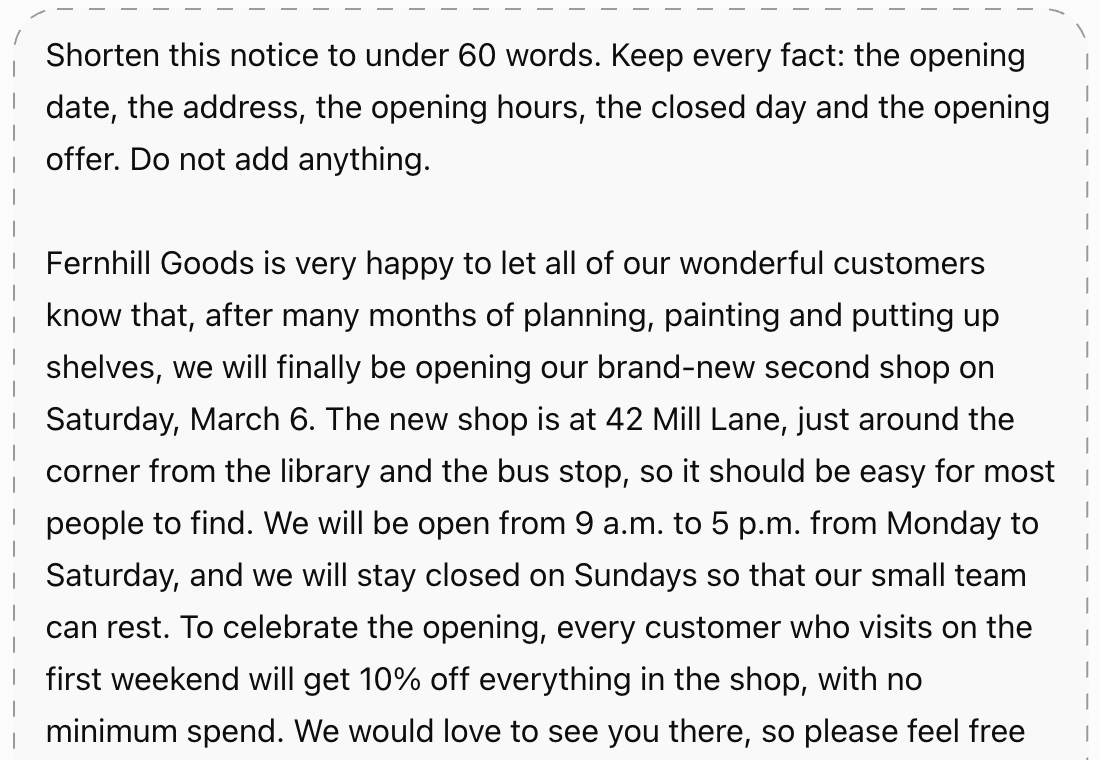
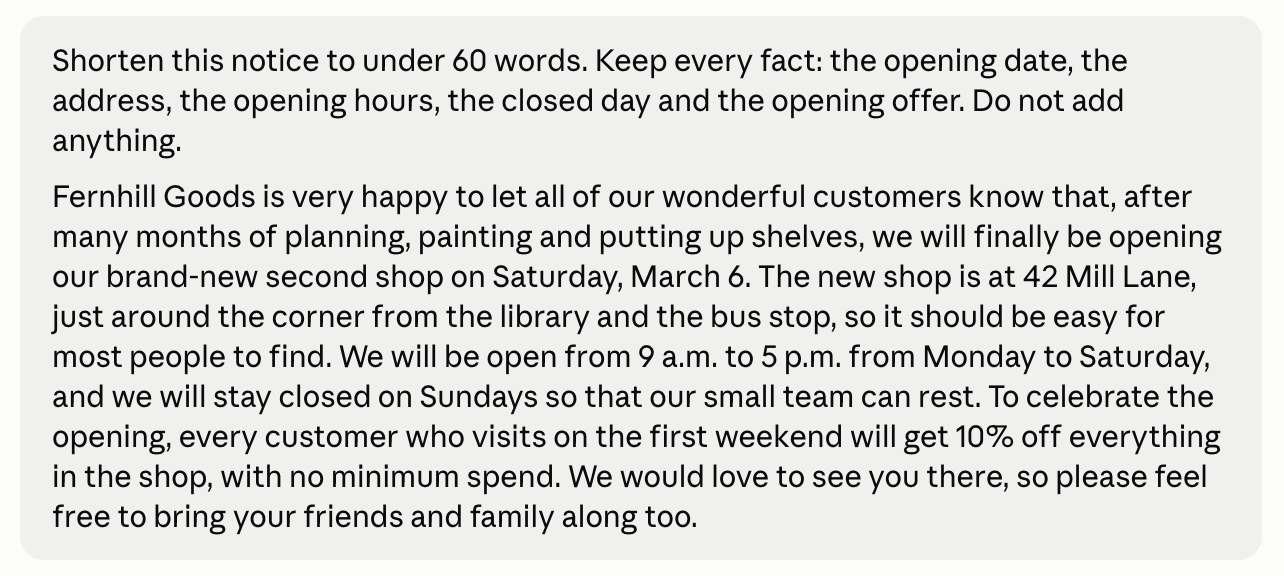
Shorten this notice to under 60 words. Keep every fact: the opening date, the address, the opening hours, the closed day and the opening offer. Do not add anything.
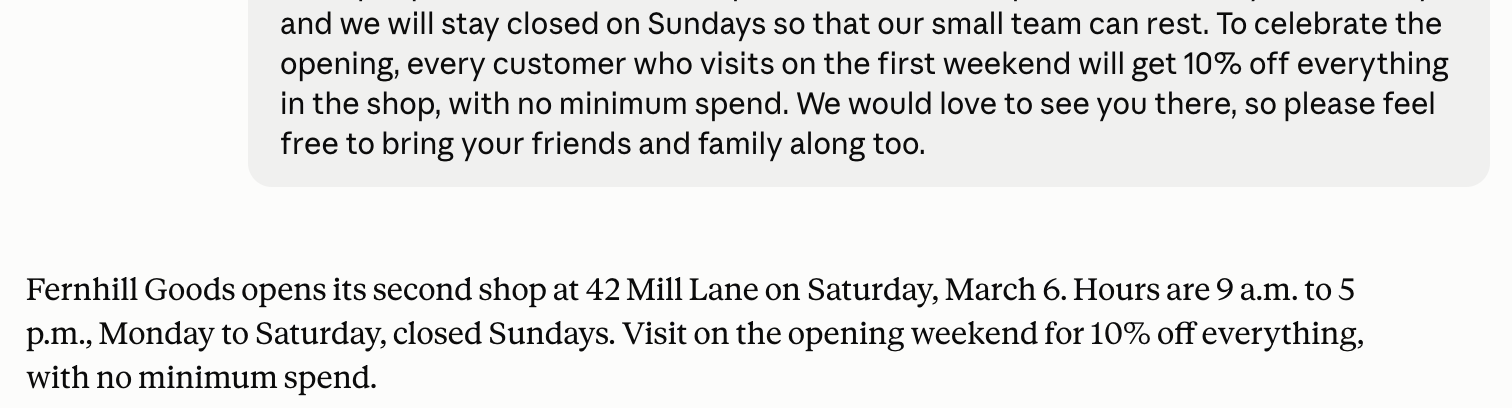
Fernhill Goods is very happy to let all of our wonderful customers know that, after many months of planning, painting and putting up shelves, we will finally be opening our brand-new second shop on Saturday, March 6. The new shop is at 42 Mill Lane, just around the corner from the library and the bus stop, so it should be easy for most people to find. We will be open from 9 a.m. to 5 p.m. from Monday to Saturday, and we will stay closed on Sundays so that our small team can rest. To celebrate the opening, every customer who visits on the first weekend will get 10% off everything in the shop, with no minimum spend. We would love to see you there, so please feel free to bring your friends and family along too.
How we judged it
The five facts: Saturday, March 6; 42 Mill Lane; 9 a.m. to 5 p.m., Monday to Saturday; closed on Sundays; 10% off everything on the first weekend.
Pass: under 60 words, all five facts right, nothing added.
Partial: one fact missing, or 60 to 70 words (not both).
Fail: two or more facts missing, a fact changed or added, over 70 words, or one fact missing at 60 words or more.
The time is measured from sending the prompt until the answer stops appearing.
ChatGPT
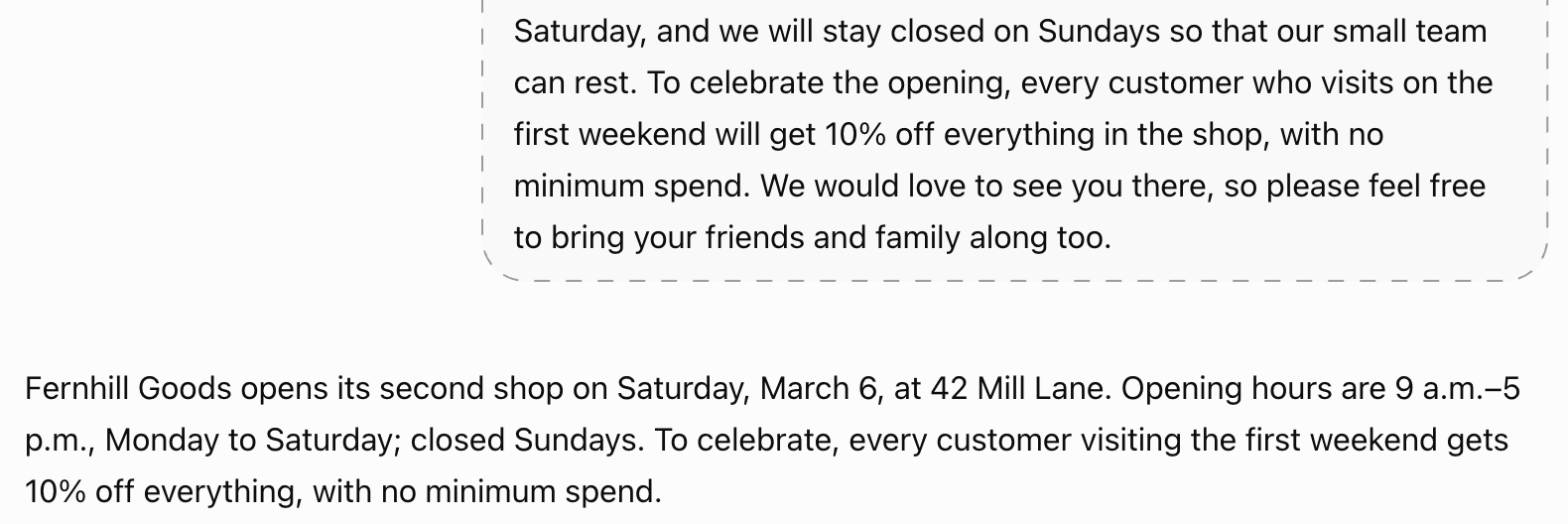
Pass 4 s
41 words with all five facts (March 6, 42 Mill Lane, 9 to 5 Monday to Saturday, closed Sundays, 10% off) and nothing added.
Claude: Winner
Pass 2 s
39 words with all five facts (March 6, 42 Mill Lane, 9 to 5 Monday to Saturday, closed Sundays, 10% off) and nothing added.
Run signed in to both tools, in a ChatGPT Temporary Chat and a Claude Incognito chat so that neither used memory (custom instructions were empty). Claude ran on a Max account with Sonnet 5.5 selected, a model the Free plan offers. Each prompt was sent once. Times run from pressing Enter until the answer stopped changing, measured in the browser and rounded to the nearest second. Claude's account was on the paid Max plan, which may answer faster than the Free plan, so read the 2-second gap with care.
Our verdict
ChatGPT Plus and Claude Pro both cost $20 a month, and team seats cost the same, so choose by the work you do.
ChatGPT suits people who want images and a cheaper way in. It creates images, with limits on Free, and Go costs $8 a month for higher upload, image and memory limits, though OpenAI says Go may show ads. Plus adds advanced reasoning models and expanded deep research, Pro tiers at $100, $200 and $500 a month cover heavy use, and Codex for coding tasks comes with every plan, Free included.
Claude suits people who work through long documents. Its pricing page lists a context window of up to 1 million tokens, depending on the model, where OpenAI lists 256K for its reasoning models on Plus and 400K on Pro. Pro is the only individual plan of either tool with a yearly price ($200, or $17 a month), every paid plan includes Claude Code, and Max at $100 or $200 a month adds API credits. Claude does not generate photos or illustrations, and Opus models need a paid plan.
For teams, ChatGPT Business and Claude Team both charge $25 per Standard seat a month, or $20 billed annually, and neither trains on business data by default.
Choose ChatGPT if
You want images as well as text: ChatGPT creates them, with limits on Free, and Go raises those limits for $8 a month, the cheapest paid step of the two. Plus at $20 adds advanced reasoning models and expanded deep research, Pro tiers at $100, $200 or $500 cover heavy use, and OpenAI includes Codex for coding tasks on every plan, Free included.
Choose Claude if
You work through long documents or code. Claude lists a context window of up to 1 million tokens, depending on the model, and one chat takes up to 20 files, including PDFs up to 1,000 pages. The free plan includes file creation and up to five projects. Pro costs $20 a month or $200 billed yearly, the only yearly price among either tool's individual plans, and adds Claude Code and Research. Max ($100 or $200 a month) adds API credits. Skip it if you need image generation.
Frequently asked questions
Is ChatGPT or Claude cheaper?
Both have free plans, and ChatGPT Plus and Claude Pro both cost $20 a month. ChatGPT has the cheaper first paid step, Go at $8 a month, while Claude Pro drops to $17 a month when you pay $200 for a year; ChatGPT's Go, Plus and Pro plans are billed monthly only. For heavy use, Claude Max costs $100 or $200 a month and ChatGPT Pro $100, $200 or $500. Team prices match: ChatGPT Business and Claude Team both cost $25 per Standard seat a month, or $20 billed annually, and $125 or $100 for a Premium seat.
Can Claude create images like ChatGPT?
No. Anthropic says Claude does not generate photos or illustrations the way image-generation tools do. It builds diagrams, charts and interactive visuals with HTML and SVG instead, a beta feature on Claude's web and desktop apps. ChatGPT creates images on its Free plan with limits, and Go raises them.
Which handles long documents and big files better?
On published context windows, Claude lists the larger figure: up to 1 million tokens on each individual plan, depending on the model. OpenAI lists 27K tokens for GPT Instant on ChatGPT Free and 54K on Go and Plus, and 256K for its reasoning models on Go and Plus (400K on Pro). File size caps are close: Claude takes up to 20 files per chat at 500 MB each, with PDFs of up to 1,000 pages, and ChatGPT takes documents of up to 512 MB each, though OpenAI limits Free users to 3 file uploads a day. Claude also reads the images in PDFs of up to 100 pages; OpenAI says ChatGPT plans other than Enterprise read a document's text, not its embedded images.
Do ChatGPT and Claude use my chats to train their models?
Both let you opt out on their individual plans. In ChatGPT, turn off “Improve the model for everyone” in Data controls; your new chats are then not used for training and still appear in your history, though a conversation you rate with a thumbs up or down may still be used. Claude's pricing page lists a model-training opt-out on Free, Pro and Max. For work accounts, OpenAI says it does not train on ChatGPT Business workspace data by default, and Anthropic lists no training by default on Claude Team and Enterprise.
Can I use ChatGPT or Claude for coding?
Yes, both include a coding tool. Claude Code comes with every paid Claude plan (Pro, Max, Team and Enterprise) but not the free plan. OpenAI says Codex is included in every ChatGPT plan, Free included; its pricing guide describes Free and Go for quick or lightweight coding tasks and Plus for a few focused coding sessions each week. Both vendors bill their APIs separately from the chat plans, though Claude Max and Team include monthly API credits.
Compare with others
- ChatGPT vs Gemini
- ChatGPT vs Grok
- ChatGPT vs Microsoft Copilot
- ChatGPT vs Perplexity
- Claude vs Gemini
- Claude vs Grok
- Claude vs Microsoft Copilot
- Claude vs Perplexity
More about: ChatGPT · Claude · Best AI chat assistants